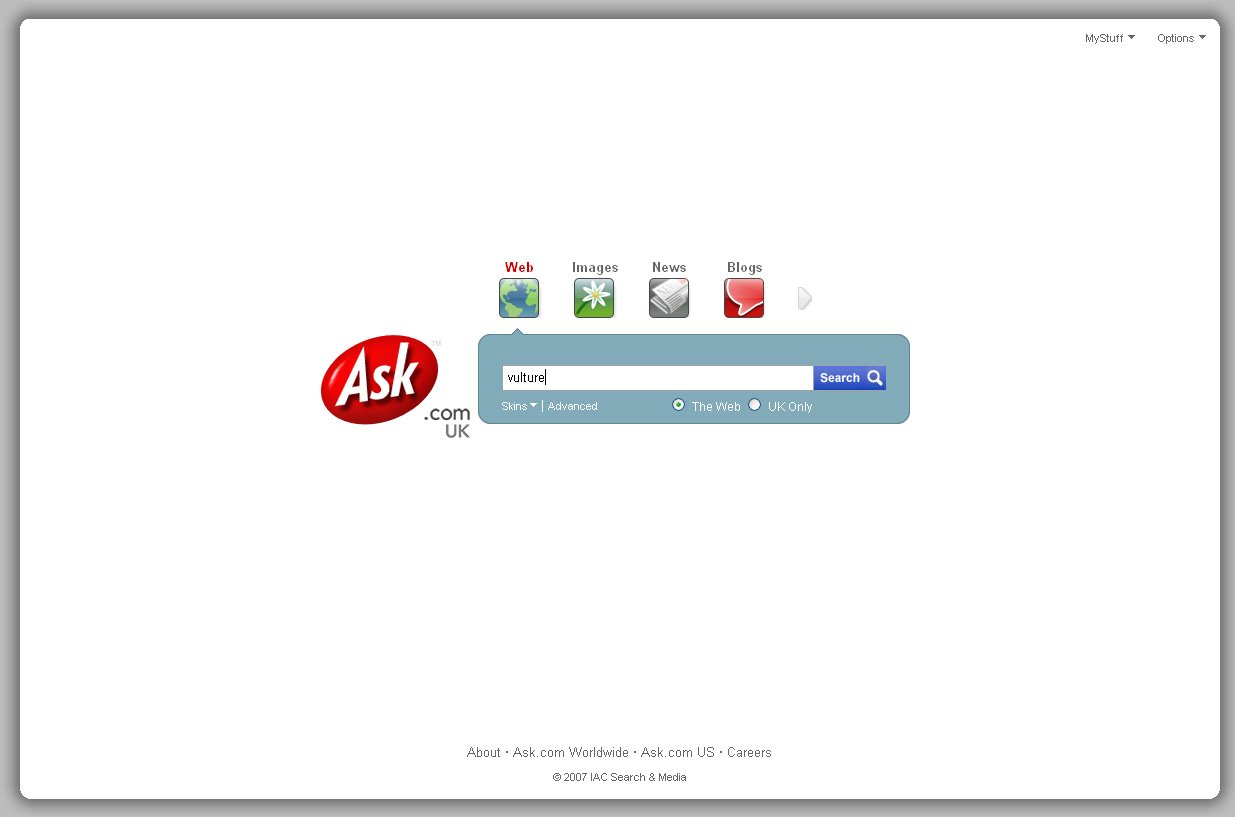
 Once typing in a search, Ask.com pulls up a wide range of useful information. Broken up into three columns, Ask.com lets you really dig into the vast amount of information the internet provides. On the right-most column Ask.com lets you scroll through some related video, pictures and even music- if you searched for your favorite band. On the left-most column is a guide to help you narrow or broaden your search.
One of the coolest features provided by Ask.com is the binocular feature. This feature allows you to take a quick peek at the websites listed. All you have to do is scroll over the little binocular picture located next to the web-link and a screen shot of the homepage of that website shows up. In case you remember what the website looks like, but don’t exactly remember the name, this feature is a great help.
Wikipedia.org- Totally forbidden by academic teachers, Wikipedia offers a very accessible encyclopedia for those looking to grab a quick idea of what something is all about. This website contains user generated material. This user-based material worries many teachers and professors across America because much of the information is not verified; therefore making it at times, unreliable.
In the time of this new digital revolution, something like Wikipedia fits right into the mindset we have started to develop as creatures of the web. We enjoy sharing information with those around us and listening to others opinions and ideas. What was the most viewed video from the tragic events at Virginia Tech? It was a video taken by a student on their cell phone.
People are capable of being the watchdog over the information they consume, like that provided on Wikipedia.
 If someone notices an error on a page they just notify the people who run Wikipedia and ask for a correction or do it themselves if they have an account. It is a self governed- user provided website that is easy to use.
At the bottom of ever entry there is a list of related links and sites to further your understanding of whatever it was that you searched. Wikipedia comes in many languages, making it an international site that connects the knowledge of everyone interested in contributing.
TMZ.com- This online gossip magazine has more traffic than it knows what to do with. There are many reasons why this is true. Number one is the content they provide. It seems people these days love to read about the stars and all the gossip that comes with them. With the look of a blog, this celebrity news site is easily navigated.
 The stories are short and sweet and always contain some photo or video. They provide the information in the way that the reader wants to consume it. No one wants to sit at their computer for a half-hour reading about Britney Spears getting arrested. They want a quick blurb of what happened and a video or picture of her in her jail-cell best.
Another great innovation that TMZ provides is something people in the business call, “convergence”. They provide multiple media outlets covering the same story. An example of this is the various links TMZ provides linking you to videos found on the web and outtakes from their television show. The site provides a little entertainment, as well, giving the browser a variety of games to play- giving the site multiple hits and keeping those viewing the site, on the site. TMZ also has links to other blogs, which furthers the continuous traffic going in and out.
All three of these sites have a common theme and that is a clean, easily navigated homepage. These sites look to provide the most information in the fastest, most easily manageable form. They do not look to confuse the browser. All three websites are very user friendly- even those who are not that computer-literate will have an easy time searching these pages.
Another similarity between all three websites is that they look to provide a wide variety of media forms- video, pictures, sound clips, etc. The real aim of these websites, and any well designed website, is to keep you on their site and provide everything for you. They do their best to create their own little Wal-Mart. They don’t want you to have to go anywhere else for information.
I think all three websites are great examples of successful sites. It is clear that there is a format that works online. There is a standard that most websites look to closely follow if not duplicate. Everyone knows the saying- "Less is more"- and all three sites try to abide by this golden rule- especially Ask.com. The only other website with the same amount of @#!$ as Ask.com is Google.com and Google may do it better. Going on name recognition alone, both websites are able to really get down to the bare minimum and streamline their site for the cleanest and easiest look.

No comments:
Post a Comment